Change Management Consulting for a Successful ERP Transformation.
New software can only bring about lasting change in a company if users embrace it from the very beginning. As part of our Haufe X360 transformation, we therefore involve people from the very start.
Over 20 years of expertise in the small and medium-sized business sector.




Change Management: The Difference Between a Rollout and Real Progress
Change management involves systematically resolving bottlenecks, mitigating resistance, and communicating proactively to guide complex transformations. This approach can be seamlessly applied to ERP or digitalization projects: Their success depends on more than just the technology. What matters far more is how well your team embraces the new processes. If the change is actively supported from the very beginning, a software rollout becomes a genuine step forward with tangible benefits for employees and management.
- Greater acceptance from the start, because your team is involved from the very beginning
- Faster, smoother implementation thanks to clear communication and early involvement
- Sustainable results: new processes are permanently established
Change management has been part of what we do from the very beginning
Change management is often viewed as an optional component in transformation projects. Our approach is different: At Haufe, change management issues are addressed throughout every single phase of a Haufe X60 implementation—from the initial analysis through implementation to ongoing operations. This ensures that a technical go-live also translates into genuine organizational success.
Our Services in Detail
We combine accounting expertise with technological know-how.
Our outsourced accounting services are fully integrated with your ERP system and offer maximum automation with complete transparency.
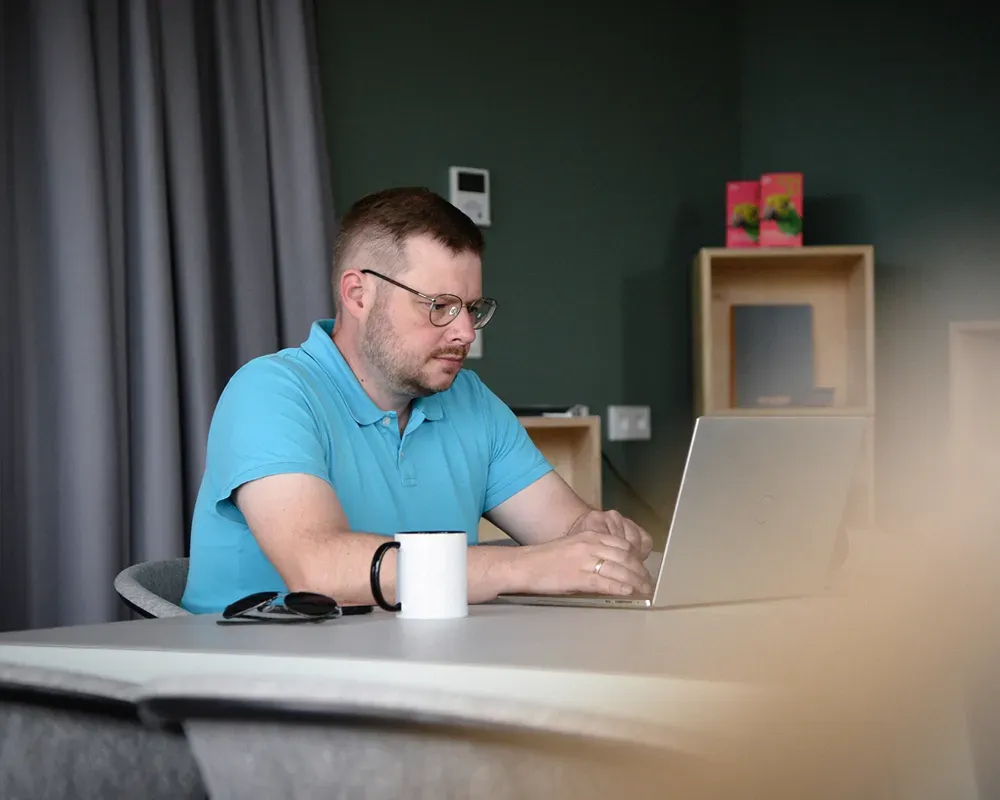
At the start of every project, we take into account not only your systems and processes, but also your organization’s willingness to change: Where is resistance likely to arise, which teams are particularly affected, and which communication channels actually work for you?
We work with you to determine how, when, and by whom the change will be communicated—tailored to each phase of the project.
Those who are given the opportunity to help shape change identify with it. We involve your key personnel early on and empower them to embed the new system and processes within the team.
Leaders are the driving force behind every transformation; we help them confidently navigate questions, uncertainty, and resistance.
Even after the technical phase is complete, we’ll continue to work closely with you to ensure that the new processes are actually implemented and that the goals we’ve set are achieved.
Rooted in the community. Strongly positioned.
BOLD & EPIC Transform is part of the BOLD & EPIC Group, headquartered in Stuttgart. This affiliation provides us with support, resources, and a network from which our clients benefit directly, without us losing the personal touch and responsiveness of a small, specialized team.
- Focus on the Needs of Mid-Sized Businesses
- Integration of IT architecture, processes, and change management
- In-house development & agile implementation
- Strategic support from the BOLD & EPIC Group
- Personal points of contact & practical consulting
Project Goal Exceeded: Fleischeslust Automates Manual Processes with Us
Fleischeslust Tiernahrung GmbH, in collaboration with BOLD & EPIC Transform, migrated its ERP processes to Haufe X360. The focus was not only on the technical implementation but also on actively guiding the team through the new processes—from inventory management to financial controlling.

Change Management Consulting FAQ
-
Change management consulting helps companies successfully integrate changes—such as new software, processes, or structures—into their day-to-day operations. This includes analysis, communication, training, and the long-term adoption of the new changes, not just their technical implementation.
-
In change management, we rely on a combination of proven methods that complement one another depending on the project phase and objectives. At the start of a project, we often conduct a Change Impact Assessment to systematically map out the effects of the planned change on processes, systems, and employees. In addition, we use a Change Readiness Assessment to evaluate the organization’s readiness for change and identify potential obstacles early on. To provide individualized support to those affected, we use the ADKAR baseline analysis, which measures the current status in terms of Awareness, Desire, Knowledge, Ability, and Reinforcement, thereby enabling targeted measures. To identify driving and inhibiting forces in the change process, we apply the force field analysis. Depending on the project’s needs, we also employ additional approaches such as Kotter’s 8-step model, stakeholder analyses, communication plans, or RACI matrices. By combining these methods, we ensure that changes are not only planned in a structured manner but also sustainably embedded within the organization.
-
No, change management processes are a fundamental part of every ERP project we undertake; however, we do not offer our consulting services as a standalone service.
-
We come from a background in ERP and digital transformation, not purely from organizational development. That’s why our change management is integrated with the technical project from the very beginning. Our goal is to introduce employees directly to the new solution and ensure they find it makes their day-to-day work easier.
-
That depends on the scope of the change. When implementing an ERP system, we typically support you throughout the entire project duration—which ranges from 4 to 6 months—and beyond, until the new processes are firmly established in your day-to-day operations.
-
Yes, many formats—from communication strategies to training sessions—can be conducted remotely. However, for workshops with executives or key users, we generally recommend in-person meetings on site, depending on the situation.

Your Contact Person
Marian Matthies Hofmann
Managing Director, BOLD & EPIC Transform